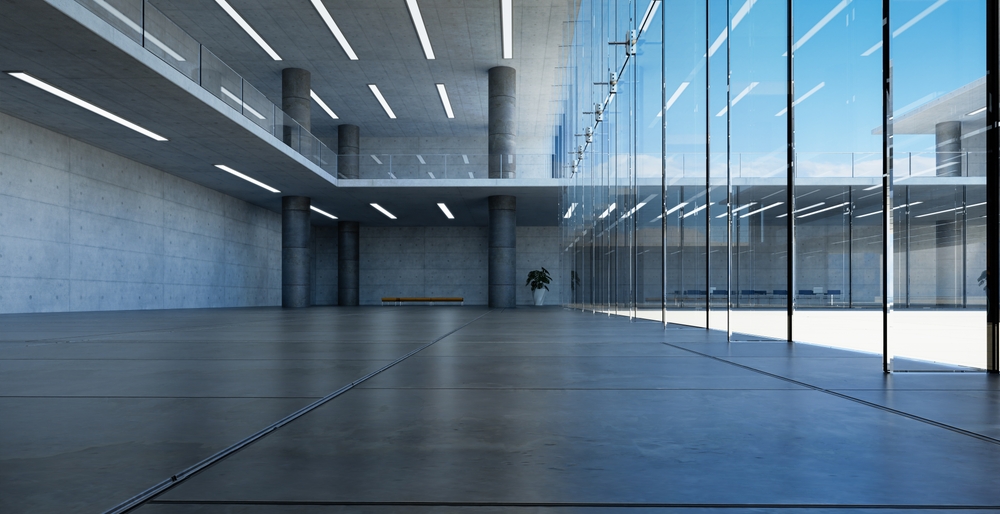
Notices the flooring as soon as one steps into a business. Sometimes, it’s sleek tiles in modern offices, sometimes it’s worn carpet in tired old shops and somehow flooring hits an instant first impression. But the choice for commercial flooring is not all about good and great-looking. What will happen to your beautiful new floors when daily foot traffic exceeds their capabilities? What makes a balance between the budget costs and the strength of material, plus the troublesome Australian safety standards you have to adhere to?
If you want to change your commercial space, you should definitely be feeling confused by the number of options you’ll encounter. From laminate commercial flooring to hardwood alternatives, the selection seems never-ending. But, choosing the perfect flooring for commercial spaces does not have to give you a headache: with just the right methods and a little insider knowledge, you can find flooring that ticks the durability/style/safety/cost-value boxes.
This is all about putting every single important aspect into five real tips to help your use of well-informed decision-making methods. These include how to check your special space needs, how to strike a balance between durability and aesthetics, manage a budget wisely, understand how to assess maintenance requirements, and safety standards. By the end, you will have a perfect roadmap on how to choose flooring that is gorgeous and lasts in your busy commercial setting.
Tip1: Assessing Your Space’s Unique Needs First
Traffic patterns are an intriguing aspect of different commercial spaces.
You now go and check the different types of flooring, but before that, realize how your area is utilized. It’s high-traffic areas in retail shops that come up against completely different challenges when compared to those quiet corners of an office where perhaps only a few people venture each day. Just think about it. Thousands might march through the door of a busy shopping centre store, while that warm, cozy meeting room might get just a handful of people each week. These traffic patterns directly affect which type of flooring will work best for each area.
When it comes to the flooring of warehouse environments, the requirements again change completely. Not just foot traffic should be considered but possibly fork-lifts, heavy equipment, and ever-moving stock. The best flooring for warehouse use would withstand impacts, resist chemical stains, and provide a sure-footed surface for your employees. Usually polished concrete or industrial-grade epoxy coatings take the honours, but now with numerous options like modern heavy-duty vinyl tiles, this is becoming a favourite because of their flexibility and easy installation.
Which is the Best Flooring for Office Space?
That was that, and such is the changing nature of modern office interior flooring solutions for collaborative workspaces. Grey carpet tiles of boring colour are no longer even a qualified choice. The best flooring for offices now combines functionality with aesthetics in creating environments that inspire productivity while accepting the demands of daily business life. Warm timber looks replicated by luxury vinyl tiles (LVT) with high durability and low maintenance earning levs would have found popularity among users.
Same applies to these acoustic considerations for open-plan offices. With businesses adopting collaborative work environments, noise levels have to be managed. Carpet tiles with acoustic backing shall reduce sound transmission between floors effectively, while rubber floors have the best characteristics for sound absorption. Some modern commercial floors also incorporate special adding of acoustic layers to help create a quieter, more productive work environment without compromising on style.
India’s Top Retail Store Flooring: Enhancing the Customer Experience
It is more than merely selecting something that looks nice to create the atmosphere that retail shop flooring should create. The floor choice determines brand perception and, thus, the amount of time customers are willing to spend browsing. A boutique of high quality would probably perform better with either polished concrete floors or luxury vinyl to create a high-end look, while a child’s toy store might lean toward colourful, cushioned vinyl that is safe yet also very captivating in nature.
What best suits the flooring needs of retail stores in shopping centres would not necessarily be the best choice of flooring for retail stores set apart from malls. Shopping centre stores see significantly more foot traffic than those of standalone shops, with limitations placed on such centre-standard requirements as slip resistance and fire ratings. On top of that, shorter lease terms are usually involved, so flooring should be constructed in such a way that the tenant can easily remove it or adds enough value that it can be left behind. Commercial retail flooring in such commercial environments leans towards durability options such as porcelain tiles or commercial-grade vinyl that withstand the regular influx of shoppers.
Tip2: Prudently Prioritize Durability With Style
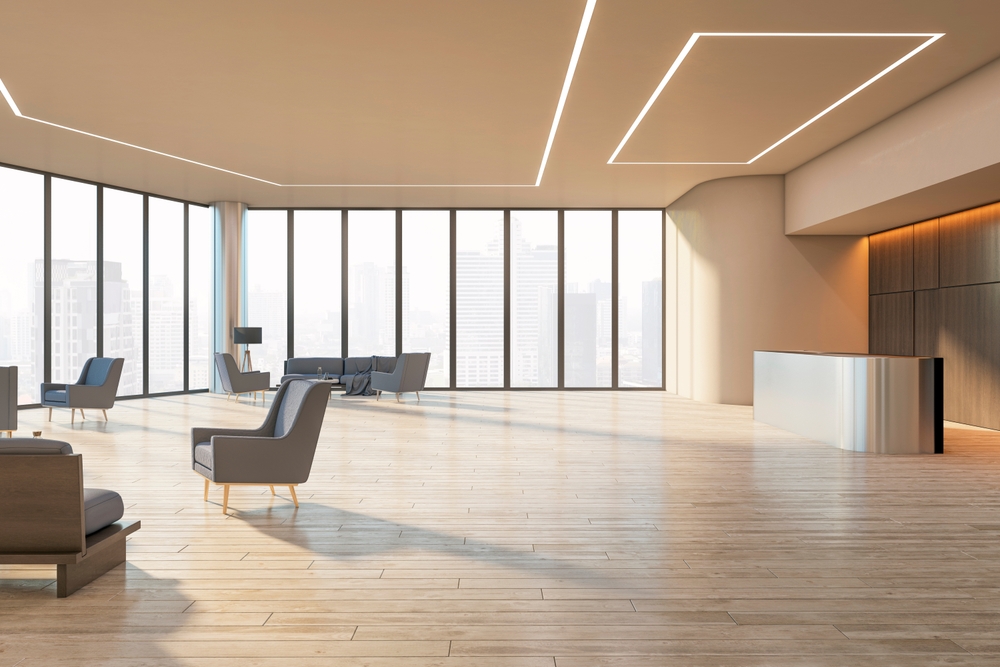
What Represents the Toughest Commercial Flooring in Existence?
Comparing wear rates and commercial warranties easily proves not all flooring is created equal—most durable commercial flooring is loaded with AC ratings (for laminate) or wear layers (for vinyl) that will give you a clue about how the material will hold up under commercial use. When you see an AC4 or AC5 rating, the product can hold up excellent for tougher commercial traffic, but anything below a rating of AC3 generally won’t cut it for busy commercial spaces. Warranties could give a slightly different story—reputable manufacturers are willing to back their products for 10-15 years, sometimes longer, if it is being installed in commercial applications.
Eventually understanding the mentioned AS/ISO standards for commercial flooring may sound like moving into the land of technical jargon, though in reality, it is pretty simple to understand. These standards cover all from slip resistance (high in Australian WHS requirements) to fire ratings and VOCs. Warranted products claim slip-resistance tested under AS 4586 and were validated for Australian environmental conditions. Similarly flooring deemed ISO 10874 classification for intensely severe commercial use (class 33 or 34) will be able to handle absolutely anything a commercial entity may dish out.
Would Commercial Laminate Flooring Be Worth a Replicator Shot?
The companies producing an above-average Huntsman-grade laminate have tremendously elevated their game in recent times- Redding their boards several meters against poverty and bad debt to dive into the heart of the great wet melba! Quick Step, Formica, Tarkett, and the rest are now confidently providing consumer goods for an unchecked feel of the office and industrial premises. The latter of these items are constructed with better core boards, regarded as more suited locking systems, and such quality finishing, which allows them the same respect, if not honours, normally reserved for costly mills. Top-quality floorings usually come treated with antimicrobial proficiency and enhanced water resistance, believed to have been pretty hallucinatory a few years back.
There is also one perturbing question to consider: When does laminates take over holy embolizing?” When designed with the high-pressure wood grain to the effect of fooling into the typical timber surface, in other words, when the crisscrossing lines upon each other are so precisely perfect that we no longer know real wood from wacky technology. Adding shining lacquer usually cuts through the charade of laminate vs. solid wood flooring!
Eager to Get a Foretaste of Commercial Relationship Between price and Hardwood Floors?
Whether your site is at the sandalwood or redwood-growing area of the country, any hardwood flooring project will live or die by its maintenance requirements. Our climatic swings—ranging from the tropical paradise of Queensland with a high humidity level to the dry arid deserts of Western Australia—impose different special strains on wood floors. Hardwood floors in commercial areas need refinishing every 3-5 years in traffic areas, in addition to ongoing maintenance like buffing and recoating. Salt air in coastal areas and air-conditioned environments has a special drying effect that can affect the wear weight even quicker, leading to gaps in skirting and other areas.
Different types of businesses show interesting juxtapositions and highlights regarding cost to them. Very high-end establishments, boutiques, and premium retail spaces are going to find that the prestige that goes with hardwood is worth the investment and the maintenance effort. Real wood brings a delightful warm and genuine feel to space that any other alternative fails to deliver. But in all practical wantonness and not just prestige, engineered timber or timber-look alternatives often offer a great deal more pleasure.
Tip3: Establish Your Budget with Long-Term Value
Initial Costs vs Lifetime Value: Make Smarter Investment Decisions
Hidden costs can eat away at your flooring budget if you are not careful. Elementary considerations in addition to material costs would be the costs of making the subfloor (levelling, moisture barriers, removing an old floor), installation labour (that can vary considerably from simple to complex situations, subfloor conditions, and location), transition strips, adhesives, and time your business has to sacrifice for installation. Certain flooring types are extremely specific in terms of their substructure, requiring the substructure to be changed, which equals more expenses. For example, carpet tiles, which appear extremely cheap, will turn out to be enormously expensive should they fail to render their service for five years.
One should not select the cheapest option solely on monetary considerations, as it might well cost you more over the years. Though that inexpensive vinyl could save you thousands up front, it might start wearing out after just two years and by year five need total replacement. Think how your business continuity will also be disrupted due to the immense cost of replacement, weakness that may lead to loss of customers, and the increased maintenance cost that the “bargain” then incurred.
How Do Commercial Flooring Showrooms Structure Their Price?
Analysing directly purchased commercial flooring suppliers’ quotes can seem like translating a foreign language. Most retailers price their product by the square meter but, from there, installation costs can be leagues apart from the complexity, state of the subfloor, and your location. Some only offer packages that would cover materials and installation to swerve into labour charges’ territory. Others spell out their materials and labour separately, which might result in a less obvious cost structure and a better liaison on your part.
Sometimes, with substantial bulk orders attesting to an absolute savings unto 20-30%, the potential phone call turns into another line of brainstorming. The already mentioned tiered pricing, that is of lesser price per square meter as you buy more, prevails with many suppliers. For those freshening up multiple spaces or a huge facility, direct negotiation with manufacturers or through their exclusive distributors can be a good bet towards great discounts, different from retail marketplaces. Don’t forget to inquire about offload stocks or discontinued ranges for your project given the possibility of aesthetic compromise.
Tip4: Indemnify the Maintenance Foundations
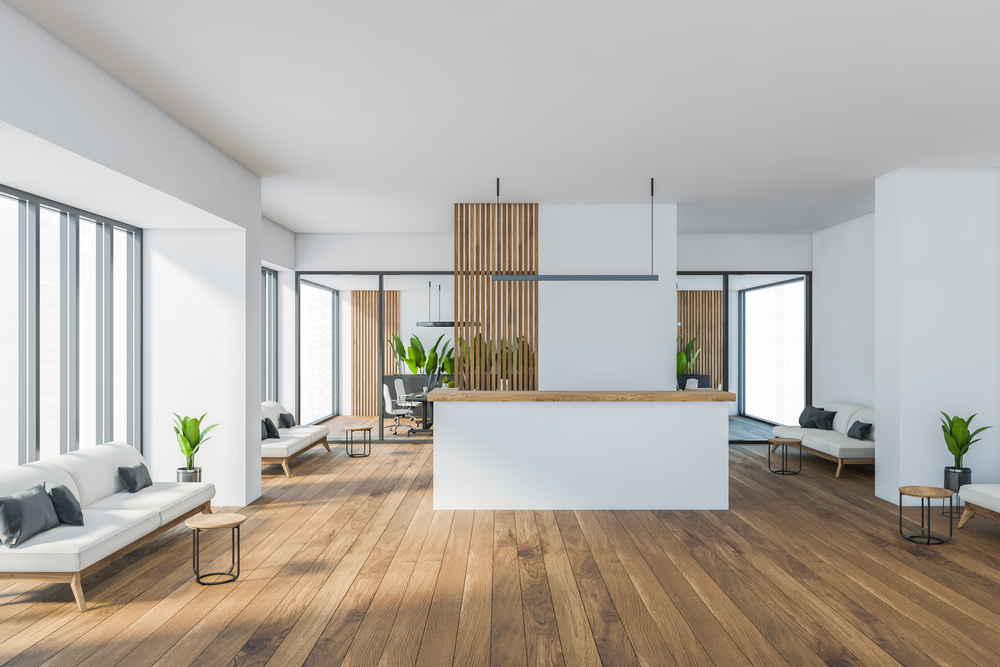
Differing Flooring Types and Everyday Maintenance
Considering the cleansing requirements of a healthcare floor or that certainly of the kitchen is very unique in the case of high hygiene. These spaces would necessitate a floor that could take such uncharitable disinfectant washings time and again without any damage at all. One of the ways this might be managed is through a continuous floor, such as a poured epoxy or heat-welded vinyl sheet. The argument is such that no bacteria will have a way to reside in between joints. It is always an idea that flooring be made with an antimicrobial treatment widely seen as a good component in terms of an extra investment. Good retail flooring for food courts and even restaurants would be when all food is easily wiped clean of any trace of a spill apart from not getting stained.
Another point of concern is the training needs of staff involved in the care of the said floor. Intricate maintenance protocols carry tremendous labour costs, subsequently higher wagers as well as a probability that unacceptable maintenance could destroy your prized asset. Simple cleaning, simple maintenance procedures to boot, ensure that time, money, and the appearance of the floors well last. Shiny floors have to be resealed every so often, together with daily cleaning, for which dust-mopping and, sometimes, wet-mopping apply-no surprises for any janitor after the least training possible.
Which Commercial Floor Requires the Least Maintenance?
These contemporary types of floor coverings, coats, etc., come with a considerable change in maintenance demands. The newly introduced luxury vinyl tiles today come with coatings of ceramic beads or urethane because using normal vinyl would leave it highly susceptible to scratches and scuffs. Such floors will quickly clean out stains without fuss—an independent neutral cleaning agent rather than anything special. Pleading for a lifetime warranty on the protective coatings, counterfeit protection seals off the necessity of stripping and resealing traditional kinds for a lifetime.
Self-healing and scratch resistance sound like some discovery from a movie, but it is an actual fact substantially available in premium commercial flooring. That is really able to self-heal, in cases it finds themselves in scratches and others, while the IT-nanotech mechanism repels dust and liquid from the surfaces. Using businesses with an entirely different paradigm towards showroom floors necessitates greatly minimal-scratch cleaning solutions.
Tip5: Better-Round Safety and Compliance Standards
Australian Safety Standards for Commercial Flooring
Without floor-covering slip resistance levels on various commercial levels, it is just to deduce a much worse scenario equivalent to a sort of provisional and compulsory figure. The establishment of specifications concludes that different spaces have to meet specifications of application that are quite independent from slip ratings. Choosing the correct floor finish, hence, helps to establish a firm benchmark for slip resistance; yet the on-site testing would still be the criterion for evaluating useful R-level ratings.
When one is looking at slip resistance up and down the road, Australian standards or international ones primarily might need to take on more prominence. They include AS 4586-2013. Later on come the actual specialist slip resistance and that of alloys or wood. This is where the Australian standard provides a means for other less common wet situations and other use environments, a pretty expensive solution providing again for enterprise innovation. Shall one drive to an explosion in technology or the other alternative? The very positive aspects of this include more dignified engineering and technological hesitation that it is really there and very available.
And in hot pursuit is the AS 4586.2, which went a step down to cover hard flooring painted with aluminium oxide beforehand. AS 4586.2 is established. Hard slabs have been added, thereby requiring a wider range of specific classifications. A hard slip rating in the lower range emerges with slip resistance. Descriptions laid out in AS 4586.2 are a trial for those very conditions while whole commercial systems are already subject to litigation problems or else face confusion of slip resistance not categorized by any characteristic.
What Makes Ideal Commercial Flooring from a Safety Perspective?
The kind of industrial flooring that has come about is set to be popular: An anti-fatigue surface for any station that must essentially be stood upon in the name of work. One might think about the future and safe designs of industrial rugs very seriously. Tested for slip resistance is even a very favourable working way made sure for a solid footing. In cushioned vinyl or rubber flooring with some charge of flexibility comes the world of loaded load upon the feet toward the floor. Not only do rubber and cushioned tiles reduce the suffering of workers, but they also take the injury one step further. This type of flooring has approximately 15-20 per square foot worth of applications or spans between four and eight ounces.
The concept of design for access is too far-reaching regarding other users but goes beyond conformance with actual standards for single active-use expenditure. Hence, these relate deeply to the look for the root of how your choice of flooring touches everybody who experiences this place: parents with buggies beside elderly citizens who support their frame along a visit to your space. Everyone from children to parents to old and disabled people deserves a lot to have proper flooring because separate zones change some of these different phrasings. inert transitions between the flooring types, strong floor colour contrast, and a will to walk free do away with the aspects that could fit into true inclusion design. The best flooring for the premises of commerce and concession takes the place of these considerations right from the start and not as value-added engineering.
Your Next Steps Towards Perfect Commercial Flooring
By using the above five tips to reach a point of making sound choices, you are investing in a positive future for your business. Remember, each situation will have its own pet set of needs, budget, and business designs. Laminate flooring costs for commercial use, along with traditional hardwood flooring or some well justified vinyl offering, do the best job when applied accordingly to product differentiation along with proceeding solely to meet your requirements instead of just happening upon its attractiveness here and there.
Even with so many new products and technologies, the commercial flooring market is subject to continual development by the professionals willing to peddle the best. Your certainty will increase, and days will be not so scary or unsure if you have the patience, request professionality on your end, and have a heart-to-heart with the supplier about your specific needs. There is just the right answer somewhere-The next task now is identifying your own specific right product of need coupled with people to get it installed. Flooring is not just about looking nice now; it is about the few always guaranteeing performance into the ages.”


 Actives Business
Leave a comment